What Are Wearable Technology and Smartwatches?
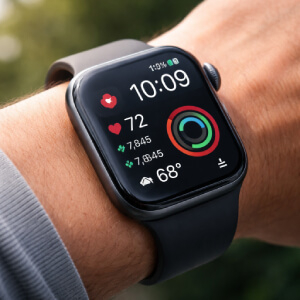
A wearable technology is an electronic device that you wear on your body, whether on your wrist, in your ear, or even attached to your clothes. They usually have built-in sensors and software that allow them to collect data, process information, and provide you with useful insights.
Now, a smartwatch is a type of wearable technology. It's essentially like a digital watch that does much more than tell the time. In fact, it's almost like a small computer that you wear on your wrist.
Every smartwatch must usually have these three features:
- Connectivity: They can connect to other devices, especially your smartphone, via Bluetooth, Wi-Fi, or cellular networks.
- Sensors and Real-Time Data Tracking: Modern smartwatches have sensors that monitor your heart rate, steps, sleep patterns, activity levels, and so on. Some can even track blood oxygen levels.
- App Integration: Just like your smartphone, smartwatches support apps. It could be fitness and health apps, music, navigation, or productivity tools.
Modern Types of Smartwatches
There are different types of smartwatches. Some are more general in the sense that they are designed to do a bit of everything. Then we have some specialized ones that are designed for specific purposes like fitness, outdoor activities, or even medical monitoring.
Here are some of the most common types available today:
Full Smartwatches
When you hear people talk about smartwatches, a full smartwatch is what they'll most likely be talking about. They are the ones that do a little bit of everything. They'll usually have fitness tracking features, health monitoring, app support, and even contactless payments. They can also have full communication capabilities, including:
- Notifications and Alerts: A feature that delivers real-time notifications directly to the watch on your wrist.
- Calling and Messaging: Some come with built-in microphones and speakers, so you can answer calls and respond to messages directly from the device.
- Integration with Smartphones: Full smartwatches are usually designed to work hand-in-hand with your smartphone. In fact, it's not an understatement to say that they are a mini smartphone on your wrist.
Fitness Trackers
As the name implies, these kinds of watches are designed primarily to track your health and physical activity. To do that, they usually track your steps, the number of calories you burn, your heart rate, sleep patterns, and workouts. Some models, however, usually have basic notifications features, that notifies you when you have a call, text messages or app notifications on your phone.
Hybrid Smartwatches
Hybrid smartwatches are like a mixture of traditional analog watches and modern smartwatches. Specifically, they are designed to look like classic analog watches. However, they also come with features like activity tracking, notifications, and sometimes even heart rate monitoring. These are the perfect kind of watch for people who still prefer the traditional classic look of watches, but want the features and functionalities that smartwatches provide.
GPS Watches
Simply put, GPS smartwatches have GPS technology in them. That means that they don't have to rely on the location system on a phone. Instead, as much as the phone, they can also use satellite signals to determine your exact position.
With this feature, they are perfect for activities like running and cycling to track distance, pace, speed, and overall performance. They are also valuable for hiking and outdoor exploration.
Some of the key features in these type of smartwatches include:
- Route Tracking: They can map out the exact path you take during an activity. This is useful if you need to review your performance or retrace your steps.
- Distance and Pace Measurement: You can use them to measure the distance you've covered whether while running or cycling. Apart from distance, they also tell you how fast you're moving.
- Navigation and Mapping: Some advanced GPS watches come with built-in maps and navigation tools. That is, you can use them to locate the right route to a place.
Types of Specialized Wearables
As mentioned earlier, there are other smart devices that you can wear on your body apart from smartwatches. And of course, the primary feature associated with them is not telling the time. In fact, most times, they are not worn on the wrist like smartwatches.
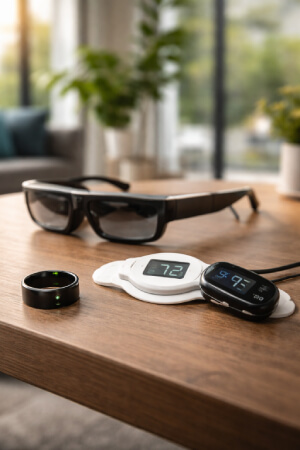
Here are some of the key types:
Smart Rings
As the name implies, smart rings are worn on the finger. The are usually designed to continuously monitor the user's health and fitness. For example, they can monitor the user's heart rate, sleep patterns, body temperature, and daily activity levels.
Smart rings can also connect to smart phones and other devices. Although there are some types that operate as standalone devices, and in that case, they usually upload data gotten into cloud computing systems.
Augmented Reality (AR) Glasses
As the name implies, AR glasses go on your face. Now, the way Augmented Reality works is that, it layers digital information on the things you are seeing physically. For example, you could be walking down a street and see navigation directions appear right in front of you, or maybe you look at a building and instantly get information about it without even needing to check your phone.
Medical-Grade Wearables
These are wearables designed specifically for monitoring health and, in some cases, clinical use. These ones go a little bit above health and fitness-specific devices in that they provide you with more precise and meaningful health data.
For example, they can monitor the rhythms of your heart beat, and track your blood oxygen levels. And when they detect any irregularities, they can immediately send alerts to you, or your health provider for potential health risks.
These devices can be custom made for individuals with chronic or underlying health conditions, and will help in properly managing their health and detecting any abnormality early. And even for the general users, it could also help detect any potential health hazard.
Technological Trends in Wearable Technology
As mentioned earlier, the boundary of innovation with wearable technology and smartwatches keeps moving. The space is evolving quickly, with new innovations that make these devices smarter, more efficient, and more independent than ever before.
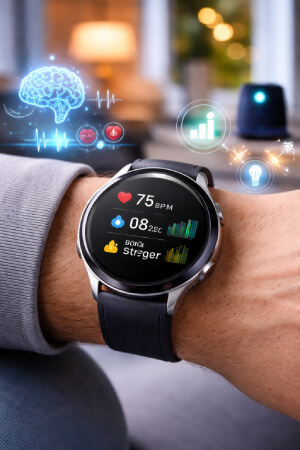
Let's take a look at some of the newest innovations and trends in the space:
AI and Predictive Health Insights
AI is now being incorporated everywhere. And the wearable technology space is not excluded. Now, instead of simply collecting data, some devices can analyze patterns and provide smarter recommendations.
For example, your wearable can tell you how you slept. But with AI, it could also suggest ways to improve your sleep based on your habits. In short, these devices learn from your behavior over time, making their insights more accurate and useful.
Advanced Health Monitoring
Today, we have wearables that can monitor a wide range of vital metrics, including heart activity through ECG, blood oxygen levels, and even stress levels. This level of detail allows users to stay more informed about their health and, in some cases, detect potential issues early.
Standalone Devices
Another major trend is the move toward independence from smartphones. Some wearables now have built-in cellular connectivity and more powerful hardware, enabling them to operate independently. So, with just your smartwatch, or any other wearable, you can make calls, send messages, stream music, and access apps directly from your device, without needing your phone nearby.
Integration with IoT and Smart Ecosystems
Wearable devices are also becoming part of a larger connected ecosystem. They can now interact with other smart devices, such as home automation systems, allowing you to control lights, locks, or even appliances right from your wrist.
Where Wearable Technology Goes Next
Technology continues to push boundaries every day, as evidenced by the advances in smartwatches and other wearable devices. Packed with different features, these gadgets have gone from just nice-to-haves to everyday essentials. And with the trends we're seeing, they're only going to become more capable and central to how we live.
Quick Links
Researchers Achieve 8cm GPS Accuracy on Smartwatches Through New Algorithm https://t.co/kXIJW5w6tR pic.twitter.com/XKNLPVhuE7
— Nextrift (@nextrift) October 21, 2025
Garmin plans to build its first production base in Southeast Asia with a factory in Thailand that will manufacture smartwatches and GPS navigational devices https://t.co/L9WzyqSbSQ
— Bloomberg (@business) October 30, 2025